Sonder
passing through a thousand world I will never truly know.

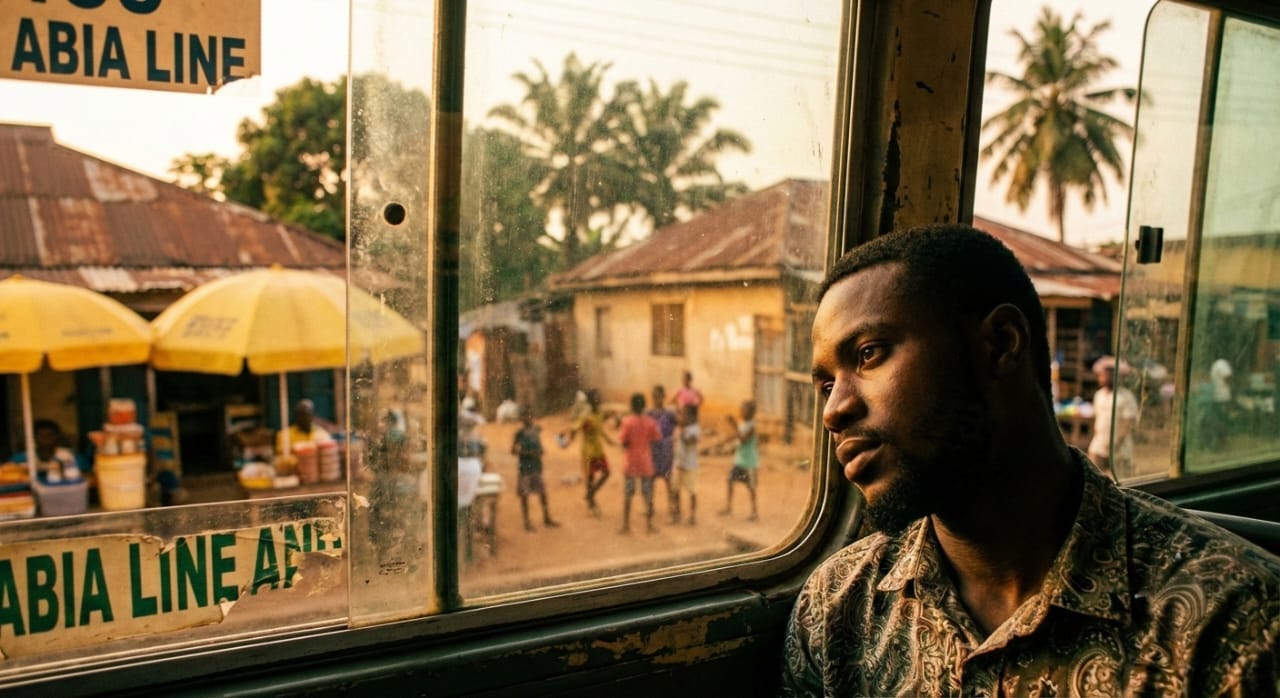
Nando gets into you slowly.
That’s the thing about it. You don’t notice it happening. You arrive. A stranger with a bag. And a posting letter. And the particular disorientation of someone who has just been handed a year of their life. And told to make something of it in a place they have never heard of. And the village just receives you.
Quietly. Without fanfare.
The red earth. The palm trees leaning into each other overhead. The sound of a generator. Somewhere. The sound of silence everywhere else. You think: I will survive this. You don’t yet know that surviving it is not the point.
I served in Nando, Anambra State, from around March 2024 to January 2025. Ten months. Long enough for a place to become home without you giving it the permission to.
The road between Ife and Nando is long in the way that certain distances are long. Not just in kilometres. In everything else, too. The thinking it gives you. The window-staring. This specific, unguarded version of yourself that only appears when you have been in a moving vehicle for more than six hours and there is nothing left to do but be still with your own mind.
I made that journey more times than I counted. Ife to Anambra. Anambra back to Ife. Each time, I carried something different. Excitement on the way out. A particular heaviness on the way back. Or sometimes, the other way around. Depending on what the months had done to me. I always preferred the car-buses when I could get one. The seats were slightly more dignified and comfy. They had windows that actually opened. Maybe. Maybe, they gave me the sense, even though false, that I was moving through the world with a little more intention.
And boy! Did I, did I always look outside the window.
Not at anything specific. Just at everything. The way the atmosphere shifted as I moved from one state into another. The trees changing. The soil changing colour. The buildings going from one style of modest to a different style of modest. Agbor appearing and dissolving. The outskirts of Benin with its commerce. And noise. And people who had somewhere to be. Small towns and smaller villages whose names I sometimes caught on signboards. And mostly didn’t. Places that existed at the edge of my awareness for thirty seconds and then were gone.
And this thought would arrive. The same thought, every single time. With the same quiet force:
These places are not passing through for them. These are their lives. I mean… the people.
That’s the one that got me. Every time. It always got me.
Because I was always on the bus or in the car in a particular state of mind. Tired, usually. Or nostalgic. Or anxious about arriving. Counting the hours in my head. Thinking about the things waiting for me at either end of the journey. The journey was a corridor for me. A transitional space between one life and another. Agbor was just a name. Benin was just a slowdown in traffic. Ore was a passing flicker. Those roadside sellers I glimpsed for a moment before the vehicle moved past were just colour in the window.
But.
That woman arranging her tomatoes on a wooden table at the side of the road in a town I would never know the name of. That table is where she has been every morning. That town is where she was born. Or where she came to. Or where life eventually set her down and said: here. Her children know that table. Her neighbours know her name. When it rains, she worries about the rain the way I worry about things that are mine. When something good happens in that town, she feels it the way I feel things that belong to me.
I passed her in four seconds. Just four seconds.
Four seconds of her entire life, and then she was gone from mine. But she did not stop existing when I stopped seeing her. She just continued, I believe. The way people continue. In a place that was real. And full. And whole. And had nothing to do with whether or not I was passing through it.
I used to press my forehead against the car window sometimes and just think about that. About how many whole worlds I was moving through without knowing. About how the road that was carrying me home was, simultaneously, someone else’s main street. Someone else’s every day. Someone else’s entire life.
It was on one of those journeys back. Back to Nando, not away from it. Somewhere between Awka and the junction where I would find a keke. Keke Napep. Watching the city dissolve into something quieter as we moved. Something cracked fully open in me. Storey buildings giving way to single-floor zinc-roofed structures giving way to trees. The road narrowing. The air changing. And faces. Faces through the window. Faces in the bus. Faces waiting at places that were not really bus stops. Just spots where people stood and hoped.
That was when the word arrived. Or maybe, not the word. The feeling the word names.
Sonder.
The realization that every single person you pass, every face at every window, every body on every roadside, is living a life as enormous and complicated and tender and exhausting as yours. That their inner world is just as loud. Just as full of things that don’t resolve easily.
There was an old woman at a roadside stop who was selling Okpa out of a basket on her head, moving between vehicles with the practiced ease of someone who had been doing this longer than some of these vehicles had been manufactured. She had a face like a map of somewhere that had seen both drought and rain. When she looked through the bus window and our eyes met for half a second, she smiled. But I felt something else. It was a full weight.
I was sitting there thinking about small things. The haircut that had taken too long. The Kojie San soap I wanted to buy, for the fourth time, that was not available. The horrible food in Nando I knew I was going back to again. These things felt like the entire weather of my interior world.
And then I looked at her and understood: so does hers.
Think about Mama Chidinma, who lived three compounds down from the Corpers’ lodge in Nando. Talking about that lodge. That lodge! I cannot say if that was a lodge or a nightmare!
Every morning. Without variation. Before the village had fully decided to wake up. She was already in her small compound garden, doing something to the soil with her hands. Planting. Tending. Pulling out whatever didn’t belong. She moved like someone who had made peace with the repetition of things. And I used to watch her from my our balcony — where the male corps members slept — in my half-awake state before I got up. And I would think: she looks unbothered. I mistook it for simplicity. The way you do when you are young and still confusing peace with the absence of struggle.
But, then, I would hear things. The way you hear things in a village where walls are thin and silence carries. A son who had travelled to Lagos years ago and whose calls were becoming less frequent. The price of palm oil. The meeting at the church about money for the roof. Her granddaughter’s school fees. Her own knees that were starting to make the morning garden harder than she was willing to admit to anyone.
Her hands in that soil every morning were not the absence of a story. They were the whole story. She was holding everything together the only way she knew how. By staying close to the ground. By putting her hands in the earth. By making things grow.
I never told her I saw her. I’m not sure she would have wanted me to. Maybe. Maybe not.
Or Emeka, who ran the small shop at the village junction where I bought bags of sachet water and lots of minimie chin-chin. And sometimes just the company of someone who spoke to me without wondering why I was there.
He was, obviously, not my age. Maybe a year or five older. He had the kind of easy manner that makes a place feel less foreign. He always had the football on a small TV propped on a stool, and we argued about it sometimes. The way men argue about football, which is to say comfortably and without real stakes. He seemed settled. Content. Like someone who had looked at his life and accepted the shape of it.
But one evening. One of those Nando evenings where the light turns everything amber and the generators had not come on yet and the village was just sitting in its own quiet. He said something I have thought about since. He said he had gotten admission once. To a polytechnic in Enugu. He said it the way you mention something that happened to someone else. Distant and almost casual. And then he changed the subject back to football.
I didn’t push. You learn. In a village. Not to push.
But I thought about it on the walk back to my lodge. That admission letter that arrived and then, for whatever reason. Money. Family. Timing. The thousand invisible forces that redirect a life. Went nowhere. And Emeka behind his counter, watching a small TV, being genuinely kind to a corps member from a different state who didn’t even speak his language. Building something in the space that remained after the other thing did not happen.
That’s not a sad story. Or maybe it is. And the sadness has company.
And the young couple I used to see on Sunday evenings walking along the path that ran behind a primary school. I don’t know their names. I never spoke to them. But Nando is big enough that you recognize, in passing, people you may never get to talk.
They walked close but not always touching. Sometimes talking. Sometimes not. There was something in how they moved together that looked like they had found a specific, private frequency that worked for both of them. A thing they had built. Or were still building.
I used to wonder what it cost them. That quiet.
The village has opinions. Families have timelines. There are pressures in a place like Nando that operate beneath the surface. Invisible to an outsider like me. But very present to anyone who had grown up breathing the air. Love here had to be a sturdier thing than the feeling. It had to be a decision. Made again and again. Against the friction of everything a little-large community brings to bear on two people trying to find each other.
I hope they are still walking. I really hope so. That is all I can do.
Here is what I keep returning to. What the road between Ife and Nando kept teaching me in a language I was slow to learn.
Every place you pass through is someone’s whole world.
Not a backdrop. Not scenery. Not a sign on a highway that tells you how many kilometres remain between you and where you are going. Every single town. Every cluster of houses set back from the road. Every market stall and zinc roof and children playing in a compound. Someone woke up inside that life this morning. Someone is worrying about it right now. Someone loves it. Or is tired of it. Or has left it and spends certain evenings aching for it in ways they can’t fully explain.
I was always on my way somewhere. Homesick going one direction. Relieved going the other. My mind already ahead of my body. Already at the destination. Already past the journey. And all the while, on either side of that bus window, entire human lives were just happening. Not for me to see. Not waiting for my witness. Just happening, the way life happens. Without an audience. Without pausing. With all its complexity fully intact whether or not anyone passing through at sixty kilometres an hour happens to notice.
There is something in that thought that both shrinks me and expands me at the same time. Shrinks me, because I am one small person moving through a world so full of other full people that the scale of it is almost impossible to hold. And expands me, because I am part of that. I am also someone’s window view. Someone on a bus somewhere has passed through my life the way I passed through Agbor. Glimpsed something of my existence for four seconds and moved on. While I kept living. Full. And complicated. And real.
This is what Nando gave me, in the end. Not the thing I expected to receive from ten months in a place I did not choose. In a state where I arrived and left not speaking the language. Eating food I had to learn to love — which I never loved, anyways. Sleeping under a mosquito net that worked until it didn’t, at the balcony of a nightmare disguising as a lodge.
It gave me this:
The knowledge that every person around you is in the middle of something enormous.
The woman selling Okpa at the roadside. Mama Chidinma and her morning soil. Emeka and the admission letter that became a counter and a small TV and a genuinely kind heart. The couple on the Sunday path. Every name on every signboard I passed and forgot on every journey between one life and another.
We are all, every one of us, whole.
I forgot this constantly. The way you forget it everywhere.
I disliked Nando. The everyday life there was below par for me. I only had two escapisms. Traveling — away from Nando, either to Awka or back home to Ife. And books. I buried myself so much in books that the in-house gossips in the lodge never deemed it fit to visit me. I counted down the months and then the weeks and then the days. And on my journeys back to Ife, I would watch the towns dissolve into each other through the window, heavy with nostalgia for a home I was moving toward. And somehow also, confusingly, for the place I was leaving. And I would sit with that ache and forget, temporarily, to look properly at what was outside the glass.
But then, sometimes, I remembered. Sometimes, the thought arrived again, clean and sharp: these places are not passing through for them. And something in me would go quiet and careful and a little bit grateful.
I left Nando in January 2025. I left the same day I had my passing out parade. I couldn’t go back to live a day more in Nando. I didn’t say goodbye. I just left.
On the last morning, I stood outside the lodge before the keke came, and the village was doing what it always did. Just being itself. Unhurried. And unimpressed. The palm trees. And the red earth. And the sound of something cooking somewhere. And a child’s voice. And a rooster with poor timing. I wanted to say something to it. Some kind of thank you or acknowledgement. But Nando didn’t need that from me either.
It just watched me go, the way it had watched me arrive.
Quietly. Without fanfare.
And somewhere in a compound three houses down, I knew. I just knew, Mama Chidinma’s hands were already in the soil. I could have betted my last 33k on it.
And somewhere on the road ahead, the bus would pass through towns whose names I would half-read and forget. And in each of those towns, a full life would be going on. Indifferent to my passing. Complete without my knowing.
I was just moving through.
They were home.
BB, you could have scooped the red earth in a jar, bring it home to Ife and place it in one of your archives as a memorial...."The red earth from Nando."
You can still travel back to get the red earth, BB
This is wa Thiongo!!!
😂 😂 😂
Kicked my nostalgia again.